


Director of the Institute of Philosophy and Sociology of ANAS Professor Ilham Mammadzada participated in an International Conference
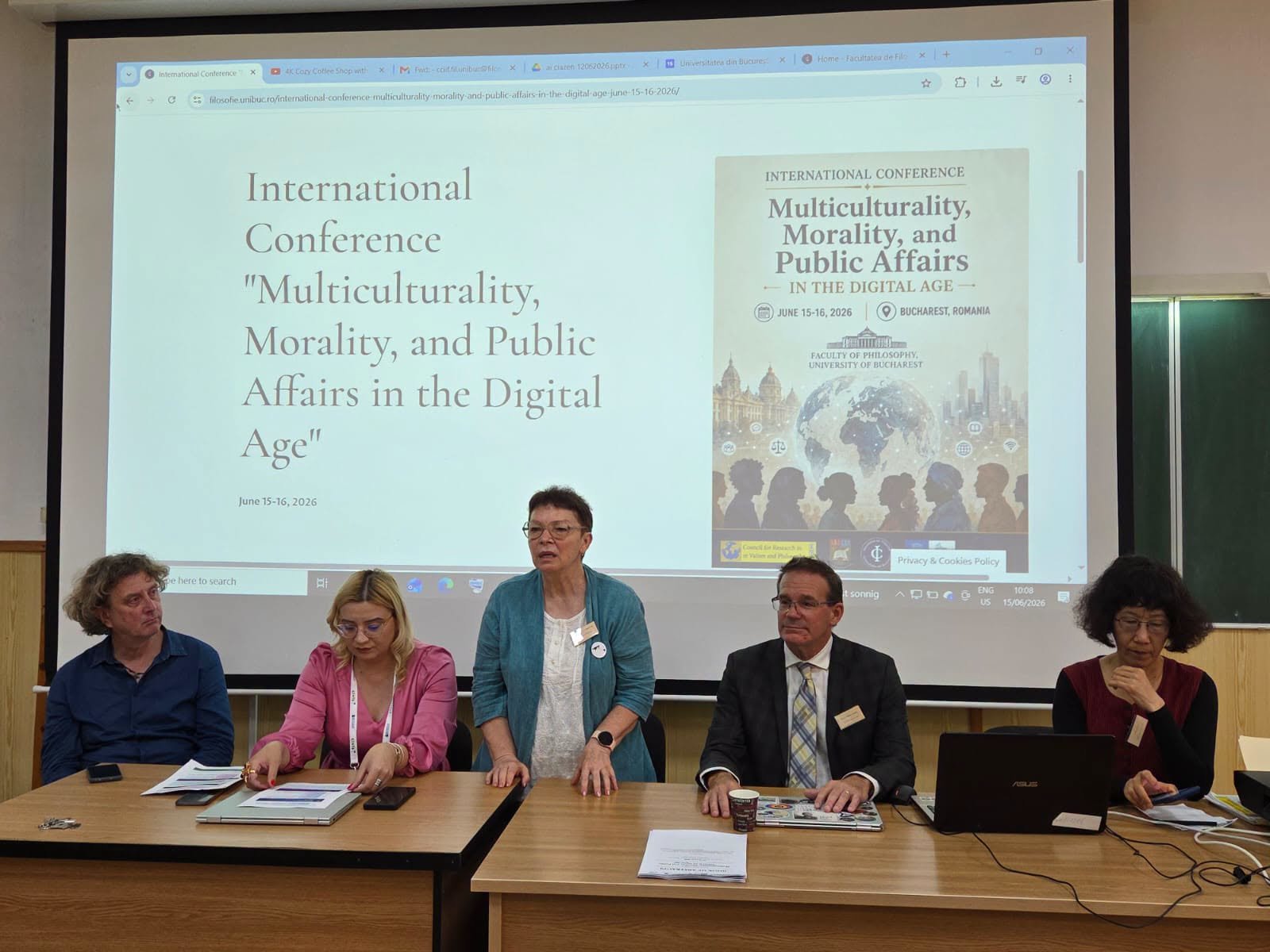 On 15–16 June 2026, the Faculty of Philosophy of the University of Bucharest hosted the international conference “Multiculturality and Morality in the Digital Age.” The conference was organized by the Council for Research in Values and Philosophy, the Faculty of Philosophy of the University of Bucharest, and the UNESCO Chair in Interculturality, Good Governance and Sustainable Development. Researchers from Europe, Asia, Africa, and North America participated in the event, presenting papers on multiculturalism, ethics, religion, artificial intelligence, and intercultural dialogue.
The opening ceremony was conducted by Viorel Vizureanu, Dean of the Faculty of Philosophy of the University of Bucharest, Professor Emeritus Mihaela Pop, and Oana Șerban, representative of the UNESCO Chair. The plenary sessions featured scholars and academics from leading universities and research centers around the world, including Chryssoula Gitsoulis (New York University, USA), João Vila-Chã (Pontifical Gregorian University, Italy), Gail Presbey (University of Detroit Mercy, USA), Jesper Garsdal (Coordinator of PROFILVIN, Denmark), Mohamed Ahmed Suleiman (Sohag University, Egypt), Bogdana Todorova (Institute for Scientific Studies in Culture, Bulgarian Academy of Sciences, Bulgaria), Ilham Mammadzada (Institute of Philosophy and Sociology, Azerbaijan National Academy of Sciences), Ghizlan Elalaoui (Moulay Ismail University, Morocco), and others. 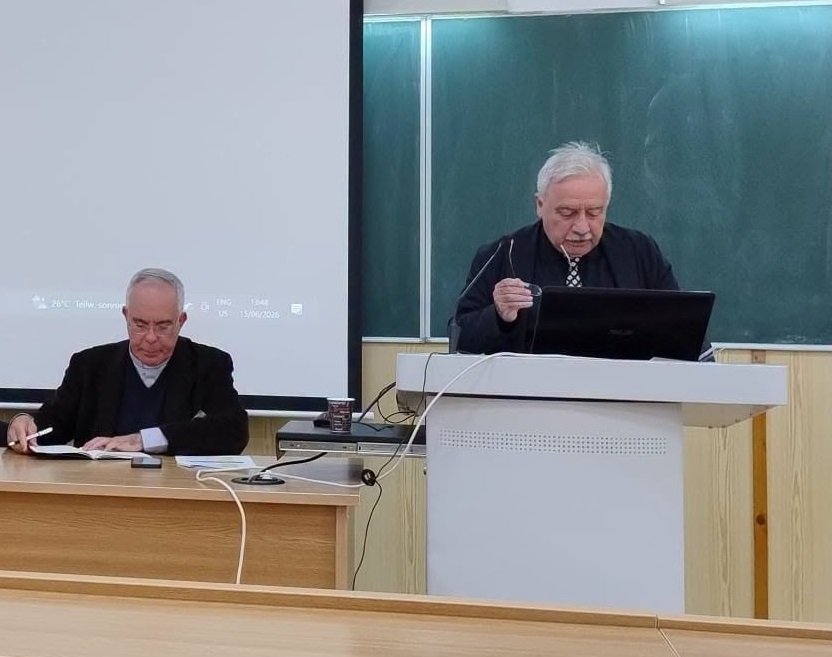
Particular attention was drawn to the presentation delivered by Professor Ilham Mammadzada, Director of the Institute of Philosophy and Sociology of the Azerbaijan National Academy of Sciences, entitled “On the Philosophy and Epistemology of Research on Multiculturalism.” The scholar noted that contemporary studies of multiculturalism are often limited to describing cultural diversity and pay insufficient attention to its philosophical foundations. In his view, many existing approaches fail to address the future development of multiculturalism and do not adequately analyze the reasons behind changes in its conceptualizations across different societies. Professor Mammadzada emphasized the need for a deeper examination of the role of philosophy and epistemology in the study of cultural diversity, as well as the importance of analyzing the impact of historical heritage and contemporary identity-formation processes. Particular attention was devoted to the Azerbaijani experience, where multiculturalism has traditionally been viewed through a historical perspective. He proposed the development of new methodological approaches capable not only of describing existing models of multiculturalism but also of explaining the mechanisms of their development and transformation in the modern world. In conclusion, he stressed that philosophical and epistemological analysis is essential for a deeper understanding of intercultural interaction and for building a sustainable dialogue among cultures.
The philosophical and epistemological framework for the study of multiculturalism presented by Professor Mammadzada became the subject of lively academic discussion. Following his presentation, he received numerous questions concerning both the theoretical dimensions of multiculturalism and its practical implementation in Azerbaijan. European scholars expressed considerable interest in the Azerbaijani model of multiculturalism, viewing it as a successful example of preserving cultural and religious diversity, promoting intercultural dialogue, and strengthening social solidarity. The discussion demonstrated the high relevance of the Azerbaijani experience for contemporary European research on intercultural relations and social integration.